
By URN
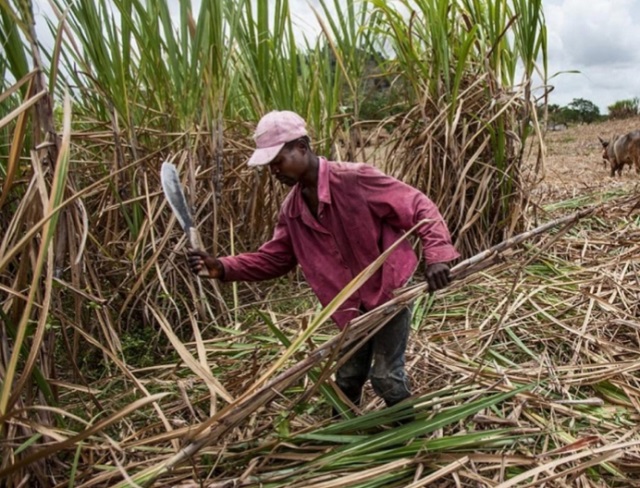
A legislator from Uganda’s sugar belt has called on the government to expedite a long-promised 45 billion Shillings intervention aimed at stabilising sugarcane production in Bunyoro, warning that farmers are still waiting more than a year after the pledge was made.
Pius Wakabi Rujumba, the Member of Parliament for Bugahya County in Hoima District and a sugarcane farmer, says the funds, previously pledged by President Yoweri Museveni, have not yet been disbursed, leaving outgrowers without the expected support.
Rujumba noted that the proposed funding was intended to bolster farmers through a grant and complementary policy measures, but implementation has stalled, even though sugarcane farming remains a major contributor to Uganda’s Gross Domestic Product (GDP).
Uganda’s sugar industry is a key pillar of the economy, producing an estimated 650,000 metric tonnes annually from more than a dozen factories. The sector supports hundreds of thousands of livelihoods across farming, transportation, and processing value chains, and is widely estimated to contribute about five per cent of GDP.
The industry operates under the Sugar Act, which categorises farmers into nucleus estate growers, aided outgrowers, and independent outgrowers. Over the years, the sector has faced persistent challenges, particularly disputes over cane pricing, weighbridge measurements, and revenue sharing between millers and farmers.
In response, the government has undertaken a series of reforms. In 2025, amendments to the sugar law were enacted following presidential assent, introducing measures to strengthen governance, enhance farmer representation on regulatory bodies, and improve transparency in revenue sharing from by-products such as molasses and electricity.
Earlier that same year, President Museveni also directed the removal of the controversial “trash deduction” levy, a move widely welcomed by farmers as a step toward fairer pricing. Stakeholders have since reported improvements in payment clarity.
Despite these reforms, calls for direct financial support have persisted. During stakeholder engagements, farmer groups proposed a stabilisation fund similar in scale to the pledged 45 billion Shillings, although some of these proposals were not formalised within the national budget.
On March 31, multi-stakeholder consultations were held in Kampala, bringing together cooperatives, millers, regulators, and government agencies to address structural challenges, including weighbridge accuracy and market transparency. The meeting also renewed calls for targeted financial support to farmer cooperatives. These discussions were followed by an early April progress report outlining resolutions on weighbridge regulation.
The measures include calibration and inspection protocols to be overseen by the Uganda National Bureau of Standards, in line with Section 26 of the Sugar Act, which mandates accurate weighing to ensure fairness in transactions.
Meanwhile, individual farmers continue to highlight ongoing challenges. David Owor, a sugarcane farmer in Masindi, said that while similar financial support proposals have previously been raised, they have largely remained at the proposal stage rather than being implemented.
Responding to the concerns, the State Minister for Trade, Industry and Cooperatives (Industry), David Bahati, said the ministry is following up on the matter and will provide a formal update.
Government officials, including Prime Minister Robinah Nabbanja, have previously acknowledged the difficulties of addressing exploitation in the sector while maintaining policies that balance the interests of both farmers and millers.
Outgrower associations in Bunyoro and other sugarcane-growing regions say that although recent legal and regulatory reforms are a step in the right direction, deeper structural challenges, such as high input costs, price volatility, and limited access to affordable credit, continue to affect productivity and farmer incomes. They argue that without direct financial intervention, many of these issues will persist.