
By Johnson Kanyesige
The Inter-Religious Council of Uganda has urged the government to reintroduce the ABC model in fighting the spread of HIV/AIDS among the young generation. The ABC model, which stands for Abstain, Be faithful, and use Condoms, was a government strategy for HIV prevention, encouraging three main behavioral changes to reduce virus transmission.
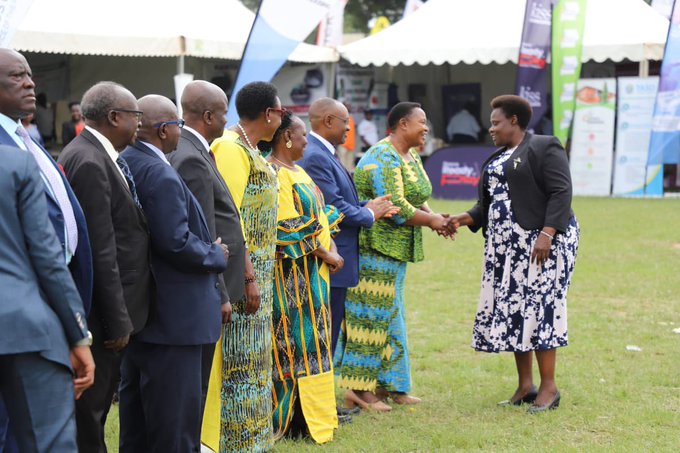
Speaking during the World AIDS Day commemoration at Kizinda Playground in Bushenyi-Ishaka Municipality under the theme “Overcoming disruption, transforming the AIDS response,” Bishop of West Ankole Diocese Johnson Twinomujuni, on behalf of the President of the Inter-Religious Council of Uganda, highlighted that the ABC campaign was the backbone of HIV prevention in the late 1980s and 1990s.
He expressed concern that the decline of the ABC campaign, combined with messaging favoring science-led approaches, has led young people born after 2000 to normalize casual sex. He called for reflection and dialogue on how the ABC model can be revamped to benefit future generations.
Twinomujuni commended the government for scientific advancements such as long-acting antiretroviral medication, used to reduce HIV risk, especially among high-risk groups, including young women, pregnant, and breastfeeding mothers. However, he called for a faster rollout and broader coverage to reach more communities.
The Executive Director of Uganda AIDS Commission, Dr. Nelson Musoba, noted that Uganda is making strides in combating HIV. He highlighted the expansion of antiretroviral therapy (ART) coverage among adults, improved treatment outcomes, and reduced viral loads.Dr. Musoba reported that 100% of HIV-positive pregnant women are receiving ART, surpassing the initial 95% target. Early infant diagnosis prophylaxis reached 97%, and viral load suppression among breastfeeding mothers is 86.8%. ART retention at 12 months increased from 72% to 84%. Despite these gains, he noted that in 2024 alone, 4,700 children were infected through mother-to-child transmission, highlighting the need for intensive follow-up.
Uganda marked World AIDS Day 2025 with a decline in HIV prevalence from 18% in the 1980s to 4.9%, and regional prevalence dropping from 2.8% to 1.4%.